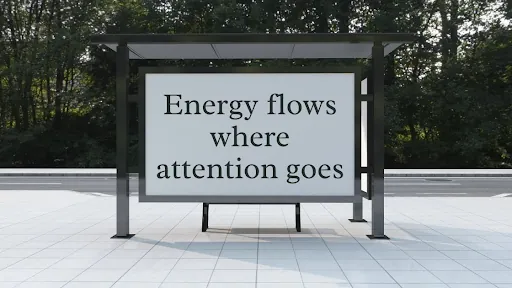
Attention is the currency of our time
Stress & Mindfulness10 October 2025 • 2 min read
I am reading a book called Rapt: Attention and the Focused Life by Winifred Gallagher. It’s a fascinating reminder that our lives are largely shaped by what we choose to pay attention to. Gallagher writes, “Your life—who you are, what you think, feel, and do—is the sum of what you focus on.”
That line stopped me in my tracks.
It made me think about how often I move through life in fragments — doing one thing while thinking about another, half-listening to a conversation while checking a message, eating lunch while planning the next task. It is as if I’m skimming the surface of my own life.
And then there are the other days. When I’m fully absorbed in listening to a client, watching light dance through the trees, or cooking a simple meal with care. These moments feel grounded, calm, and fulfilling. The difference isn’t in the day itself — it’s in me, in where my attention rests.
Positive psychology calls attention the foundation of wellbeing. Our thoughts and emotions follow the direction of our focus. When we attend to what is good, meaningful, or growth-promoting, our brain strengthens those pathways. Life begins to expand around what we choose to see.
The wisdom of focus isn’t modern. The Bhagavad Gita, the ancient Hindu text, spoke of it as the highest discipline — holding the mind steady in a world that constantly pulls us off course. Buddhism echoes the same truth: awareness begins the moment we notice we’ve drifted and choose to return. The quiet art of awareness, simple and ancient, is profoundly relevant in our hyper-stimulated modern lives.
There’s a piece of advice I often give myself, my children, and my clients: be where your feet are. It’s a simple reminder to return to the present moment — to the conversation, the breath, the body, the ground beneath you. When I remember this, the noise fades. Life feels more textured, more real.
It’s comforting to realise that attention is a skill, not a fixed trait. We can train it. We can notice when we drift into distraction or worry and choose to come back to what matters, to who matters, to where we are.
So, here’s a small invitation. Over the next few days, simply notice what you notice. When your mind spirals, gently bring it back to what’s here. Pay attention to something ordinary — the sound of your breath, the colour of the sky, the tone of someone’s voice.
You might find, as Gallagher suggests, that your world begins to feel fuller — not because circumstances changed, but because you did.
Where attention goes, life grows.