The Loneliness Epidemic: What Will It Take to Find Our Way Back?
Mental Wellbeing22 November 2025 • 4 min read
Half a century ago, in villages across India, the central well was more than a source of water. Each morning, people gathered there — sharing news, exchanging laughter, children playing as mothers filled their buckets. Friendships blossomed, wisdom flowed from elders, and life moved to a rhythm of togetherness. Screens and schedules did not exist.
These “wells” were not unique to India. Across Europe, the village square or market pulsed with daily life. In parts of Africa, the communal courtyard or riverbank brought people together. Even in early America, the general store was a hub for conversation, support, and belonging. Across cultures, human life was built around shared spaces — where people were seen, heard, and known.
Today, those “wells” have quietly disappeared. We come home and close our doors, spend evenings under the blue glow of screens, and drift through days surrounded by noise but starved of connection. We are linked to people across the world in ways our ancestors could never imagine — yet many of us still feel profoundly alone. Shared spaces have faded, replaced by curated feeds and fleeting likes. We’re plugged into the global village, yet still longing to feel anchored somewhere real.
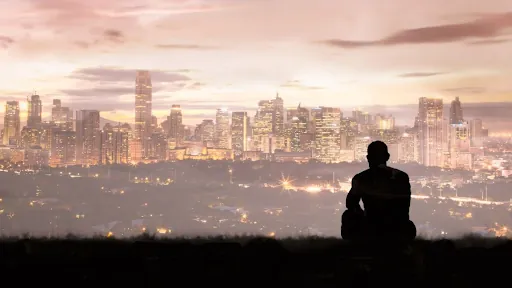
Loneliness is the quiet ache of feeling unseen, even when surrounded by others. It can live inside a marriage, a workplace, a bustling city street, or the stillness of an empty home at night.
This is happening because we’ve digitised connections. We meet through screens, send messages instead of visiting, and scroll through carefully curated lives that seem fuller than our own. Our days look busy yet often feel hollow — a blur of work, errands, and notifications that leave little room for the slow, nourishing rhythm of true conversation.
Once, every community had its “waterholes” — a park, a marketplace, a corner café — where people naturally met. Elders shared guidance, neighbours offered support, and children grew up among familiar faces. Community wasn’t something to schedule; it was simply woven into daily life.
Now, that fabric has frayed. Virtual spaces often imitate connection but can deepen comparison and isolation. And loneliness, if left unacknowledged, can quietly erode our well-being, increasing stress, anxiety, and sadness.
As psychiatrist Dr Gabor Maté reminds us, “The essence of trauma is disconnection — from ourselves, from others, and from the world around us.”
Neuroscientist and addiction specialist Dr Anna Lembke, author of Dopamine Nation, adds that in a world overflowing with digital stimulation, we have become “dopamine rich and connection poor.” Our constant pursuit of online engagement gives us fleeting pleasure but robs us of the deeper satisfaction that comes from real human presence. When everything we need is available at the swipe of a screen, we lose the very friction that once brought us together.
Growing up in India, I remember the Mahabharat TV series that aired across India every Sunday morning in the 80s. For those couple of years, time seemed to pause every Sunday morning. Families gathered in living rooms, neighbours dropped in, and streets went quiet. Across India. Everyone was watching the same story unfold — together. There was laughter, discussion, the smell of breakfast in the air, and a shared sense of belonging and connection that felt so natural.
Now, even with a thousand shows at our fingertips, that kind of togetherness feels rare. We watch alone, on our own schedules, on separate screens. The joy of waiting, the anticipation, the shared experience — it’s just gone. And sometimes, I long for that — for the feeling that we were all part of something, side by side.
It’s time to rebuild our modern-day “wells” — spaces, physical or emotional, that invite gentle human connection. To pause. To notice. To talk, laugh, and simply be together and show up for one another. I am keen to hear from you as to how we can create opportunities for human connection.
That’s what inspired Canberra Unplugged — a small, mindful effort to step away from screens and rediscover real-world connection. It’s an invitation to look up, reach out, and remember that we’re not alone after all. Email me [email protected] to find out more about this initiative and how you can be part of this movement to reconnect with community and with yourself.